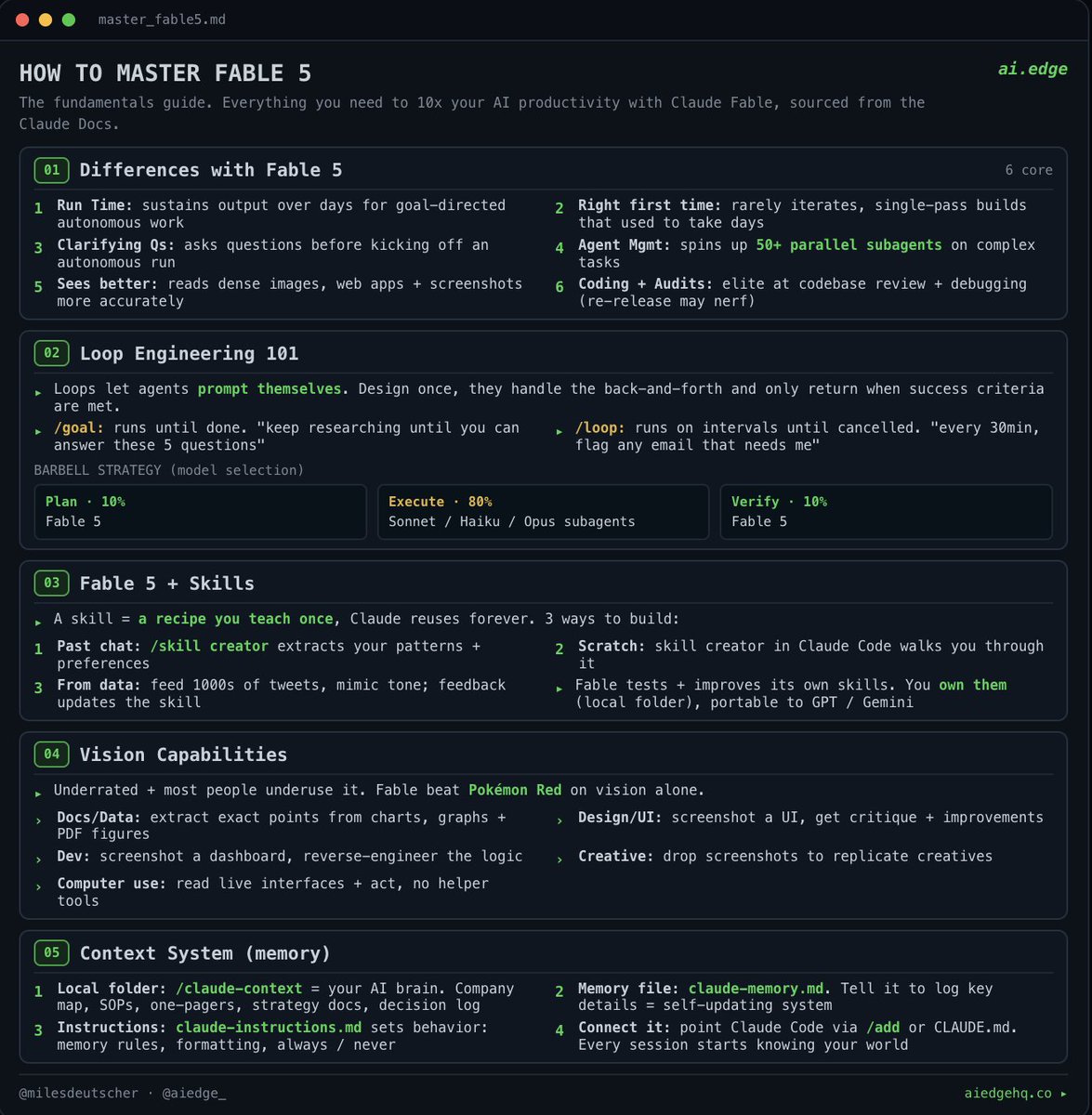
/goalを改善する方法は、実行する前にループを設計すること
設計が甘いループはトークンを無駄に消費して、すぐに雑な結果を返してくる。だからループハーネスの設計に時間をかけることが重要
/goalを書いてうまくいくことを祈るのではなく、まずLOOPERスキルに通す。これがやってくれること:
> あなたのループを批評し、ベストプラクティスのライブラリと照らして鋭くする
> 検証ルーブリックを構築するので、ループが「完了」の意味を実際に理解する
> LLMをジャッジとして追加可能に、codexや非Claudeモデルも含む
> ガードレールとトークン予算を設定できる、厳しくも緩くも、暴走しないように
> 全体をポータブルなアーティファクトとして書き出し、繰り返し使ったり編集したりできる
これは品質の高いループを作るための設計レイヤーで、それをClaude Codeや他のモデルに渡す
先週投稿したLLM councilのセットアップと組み合わせられる。looperでループを設計して、2つ目のモデルで作業を確認しながら実行する
いい仕事だね @KSimback
Kevin Simback 🍷@KSimback
Feeling a bit loopy? Introducing Looper - your loop design coach
It’s been made clear that we shouldn’t be promoting agents, we should be designing loops
You can use /loop or /goal but if your loop is poorly designed then it won’t produce good output
Even worse, a poorly designed loop will burn a ton of tokens
So I created Looper - a tool to help me design better loops, and decided to open source it
Here’s what it does:
> /looper invokes the loop design wizard
> critiques your goal/loop and helps you sharpen it based on a library of best practices
> builds a verification rubric so it knows what "done" should be
> allows you to add an LLM as judge, including non-Claude models like Codex
> adds guardrails and helps you set a budget with tight/generous options to avoid token waste
> generates portable artifacts to make it easy to repeat / edit the loop
> gives you a visual diagram for your loop (see replies for examples)
Looper is intentionally a design layer, not a heavy orchestration framework - it helps you create a loop worth running, then hands it to Claude Code or your own runner/orchestrator
Please share your feedback, this was v0.1 so I expect it to have room for improvements, and feel free to submit issues or PRs
Note: Looper was inspired by @mvanhorn's "WTF is a loop" article and then fine-tuned with some of the tips in the great loop architecture article by @djfarrelly
https://t.co/smAXbBrWnW